
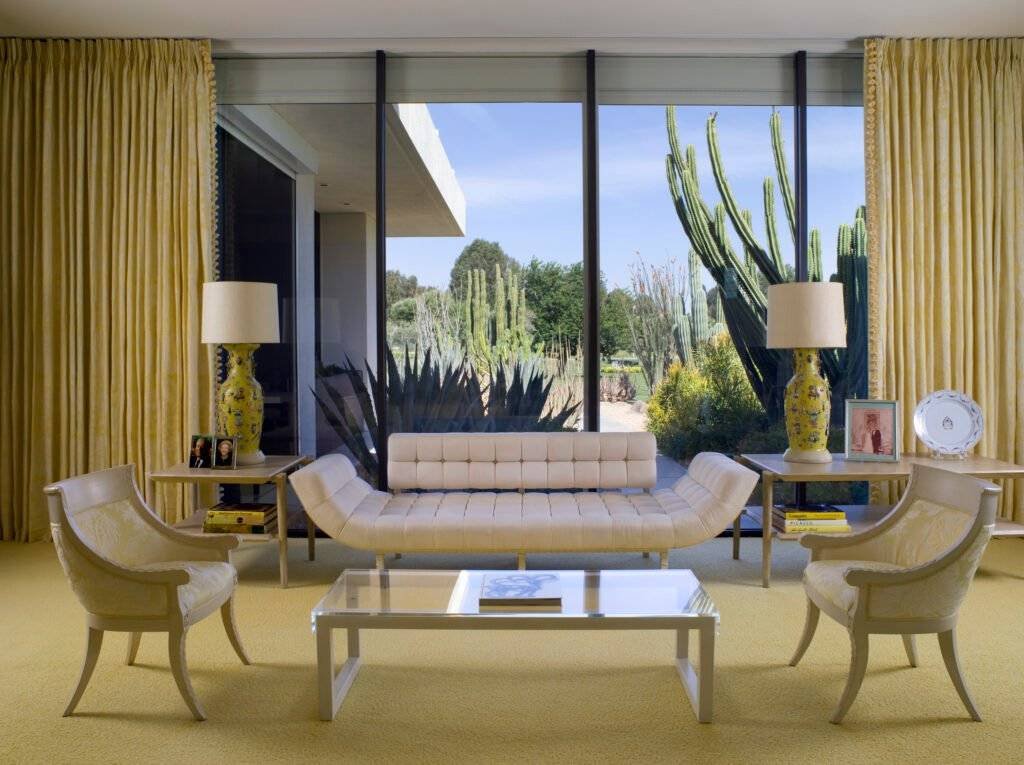
Interior design in Palm Springs is less about decoration and more about how a space actually performs over time. Palm Springs interior design has to account for intense heat, harsh sunlight, and a lifestyle that moves constantly between indoors and outdoors.
Getting that balance right is what separates a good-looking room from one people genuinely want to spend time in.
Comfort Is the Whole Point
No amount of space or styling can save a room that overheats by midafternoon. Interior design should begin with one question: how does this space feel at two in the afternoon in July?
1. Material selections
2. Window treatments
3. Furniture placement
—They all serve that central goal.
Style follows function in this market, not the other way around. The best Palm Springs interiors achieve both without visible compromise in either direction.
Balancing Light and Shade
Palm Springs receives more direct sunlight than almost anywhere else in the country. That is both a significant asset and a serious design challenge that never fully goes away. Designers working here deal with glare, material fading, and overheating as permanent factors in every project.
The answer is not to block the light entirely. It filters and redirects light to keep the space bright and comfortable. Greg Young treats lighting layout as one of the most consequential decisions in any interior project.
Best Interior Designers in Palm Springs, CA —Where Most Homeowners Go Wrong
Furniture and fabric mistakes in Palm Springs tend to follow a recurring pattern. Homeowners choose based on how a piece looks in a showroom, without considering how it will hold up under sustained desert conditions. Fabrics that fade quickly, materials that warp in heat, and upholstery that traps heat are common issues here.
An interior designer working in this climate knows which products actually survive and which do not. That specific knowledge alone makes the investment worthwhile from the start.
Designing for Every Season
A Palm Springs home that looks stunning in December but feels tired and worn by May has a fundamental design problem. Year-round livability requires materials and color choices that hold up across the full range of desert conditions.
Neutrals that shift naturally with changing light, textiles that breathe well in the heat, and surfaces that do not show every bit of dust are all part of the equation. The goal is a space that feels considered and comfortable, regardless of the month shown on the calendar.
Design Before You Remodel
Interior design should happen before remodeling starts, not after the walls go up. The sequence of decisions matters more than most people realize going in. Choosing finishes, layouts, and materials after construction has already begun leads to costly mid-project changes and compromised results.
Level 7 Design and Build integrates design planning into the remodel from day one. That approach directly impacts rental performance and guest experience in vacation properties as well. A well-designed space books faster and holds its value over time. That is not a luxury argument. It is simply practical.
FAQs
Is interior design in Palm Springs really that different from the rest of the country?
It is. The heat, sunlight intensity, and indoor-outdoor lifestyle here affect which materials perform well, how rooms are laid out, and what holds up over time. Those factors do not exist in the same way in most other places.
What kinds of fabrics and materials work best in Palm Springs homes?
Anything that breathes well, resists fading, and does not trap heat. A designer working in this climate already knows which ones they are. Picking based on a showroom photo alone is how problems start.
Should interior design happen before or after a remodel?
Before. Once walls are up and finishes are locked in, changes get expensive fast. Planning the interior and the remodel together keeps costs down and the results much tighter.