
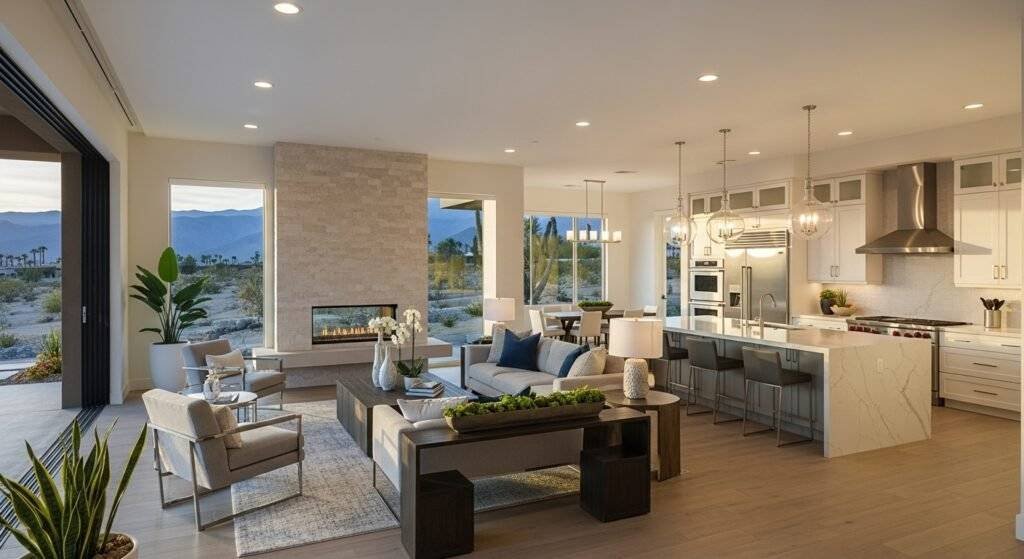
You might have experienced the frustration of managing separate designers, contractors, and electricians—only to find that no one communicated effectively.
- Decisions were delayed
- Timelines stretched unnecessarily
- Accountability was unclear
- Budgets exceeded
Renovation projects often fail when responsibilities are split across multiple parties. That’s why having a single team that handles both design and construction is crucial.
At Level 7, we coordinate every step from planning to execution, ensuring smooth communication, timely decisions, and a renovation that actually delivers. Keep reading to discover how we make complex projects seamless and stress-free.
Why Renovations Need Leadership, Not Just Labor
Renovation complexity comes from coordinating design intent, construction sequencing, and vendor schedules. Designers create plans without considering construction logistics. Contractors build what’s specified without questioning functionality. Material suppliers ship without confirming installation readiness.
These disconnects create delays, change orders, and finger-pointing. A general contractor who manages both design and construction centralizes decision-making and accountability, preventing coordination failures.
Leadership means taking responsibility for outcomes, not just executing tasks. It means catching conflicts before they reach the field. It means knowing when design modifications improve functionality and when they just add cost.
Level 7, as a professional general contractor in Palm Desert, CA integrate design services with construction management, creating single-source accountability for project success.
One Team Responsible From Start to Finish
Split responsibility creates accountability gaps. Designers blame contractors for poor execution. Contractors blame designers for impractical plans. Neither accepts responsibility for results. At Level 7, we eliminate this dynamic. We own both the design intent and the built reality. If something doesn’t work, we fix it, rather than pointing fingers.
Our single-source accountability also simplifies communication. You have one point of contact for design questions, construction updates, and problem resolution. This streamlined approach reduces stress and prevents the confusion that comes from managing multiple vendor relationships simultaneously.
Interior Design Integrated Into Construction Planning
Our designs are fully buildable from the start. We consider structural constraints, utility routing, and material availability during development, not after bidding. We verify that all elements fit within existing conditions, that materials install as specified, and that finished spaces meet code requirements. This coordination prevents costly change orders and field modifications.
Construction planning directly informs our design decisions. Lead times affect material selections. Demolition sequences shape phasing strategies. Subcontractor availability determines scheduling. By understanding these constraints, we create plans that build efficiently without requiring constant adaptation.
Our interior design expertise in Palm Desert, CA, also includes deep knowledge of local construction practices. We navigate regional permit requirements to avoid unnecessary reviews and specify products from reliable local suppliers. This ensures projects move forward smoothly rather than stalling on preventable obstacles.
Clear Planning Through 2D and 3D Visualization
Mismatched expectations cause frustration and disappointment. Clients may imagine one result while construction produces another. We bridge this gap using advanced visualization tools. Our floor plans show spatial relationships, elevations reveal proportions, and 3D renderings communicate materiality and finishes.
These tools enable informed decision-making. Clients see proposed layouts before construction begins, identify issues when changes cost nothing, and approve finishes with confidence rather than uncertainty. Our visualization process reduces surprises and ensures the finished result matches expectations.
Structured Project Management That Protects Timelines
Renovation timelines fail when coordination breaks down. Materials arrive before installation readiness, subcontractors show up unprepared, and decisions get delayed waiting for approvals. At Level 7, our structured project management prevents these failures through disciplined scheduling, vendor coordination, and decision tracking.
We sequence trades logically: demolition completes before framing begins, rough-in finishes before drywall installation, and final finishes wait until protection is in place. This sequencing prevents rework and keeps projects progressing efficiently.
Effective project management includes:
- Critical path scheduling that identifies timeline dependencies
- Vendor coordination, ensuring material delivery aligns with installation schedules
- Subcontractor management, maintaining quality and progress standards
- Decision tracking prevents delays from approval gaps
- Progress documentation providing transparency and accountability
Room-Specific Design Expertise
Different rooms require different design approaches, for instance,
- Kitchens demand workflow efficiency and durable finishes.
- Bathrooms require moisture management and precise fixture coordination.
- Living areas prioritize comfort and visual appeal.
- Bedrooms emphasize tranquility and storage.
At Level 7, we carefully plan each room to meet these unique requirements.
We manage kitchen design, including appliance placement, cabinetry layouts, and countertops, balancing aesthetics with functionality. For bathrooms, we coordinate plumbing rough-ins with fixture placement to ensure proper clearances and code compliance.
Living areas are designed with furniture scale, traffic patterns, and layered lighting in mind. Bedrooms are optimized for closet capacity, bedding orientation, and light control.
Design Elements That Shape How a Home Feels
Atmosphere comes from layered design elements working together. Color creates mood, texture adds depth, form defines spatial character, and light reveals and conceals. We intentionally manipulate these variables to create environments that evoke desired feelings.
We consider color carefully:
- warm tones feel inviting
- cool tones feel calming
- neutral palettes provide versatility
- accent colors add energy
Texture adds tactile and visual interest, smooth surfaces feel modern and clean, rough textures feel organic and grounded. Form influences spatial perception: horizontal lines widen spaces, vertical lines add height, and curves soften and guide flow.
Renovations Work Best When Responsibility Is Centralized
Successful renovations require integrated design and construction oversight. Managing multiple vendors creates coordination challenges and accountability gaps that delay projects and inflate costs.
When one team controls both design intent and construction execution, projects move efficiently, communication stays clear, and responsibility remains centralized.
With over 25 years of experience, Greg Young at Level 7 Design and Build brings this integrated approach to every renovation, ensuring your project delivers both the functionality you need and the quality you deserve.